ISO 9001:2015
All Dunmore manufacturing sites are certified to ISO 9001:2015. The quality management system applies to development, production, and delivery.
Reliable in high-temperature, chemical, and abrasive environments. Film solutions for the automotive industry that deliver long-term performance.
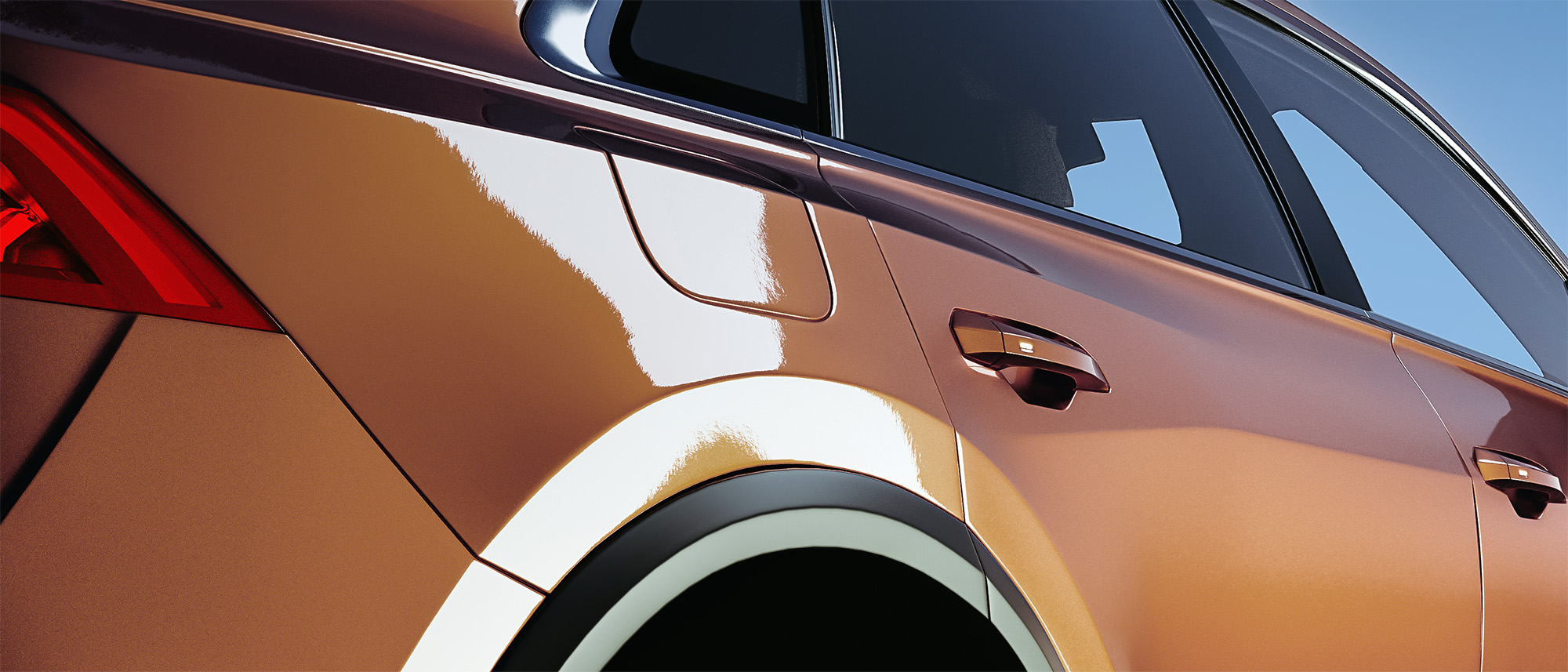
Materials determine whether surfaces can withstand everyday use, whether a label remains legible over time, or whether thermal insulation in a building works effectively. Dunmore develops films for the automotive industry in the form of coated, laminated, and metallized material systems that are designed to withstand temperature, chemicals, abrasion, UV exposure, and mass production.
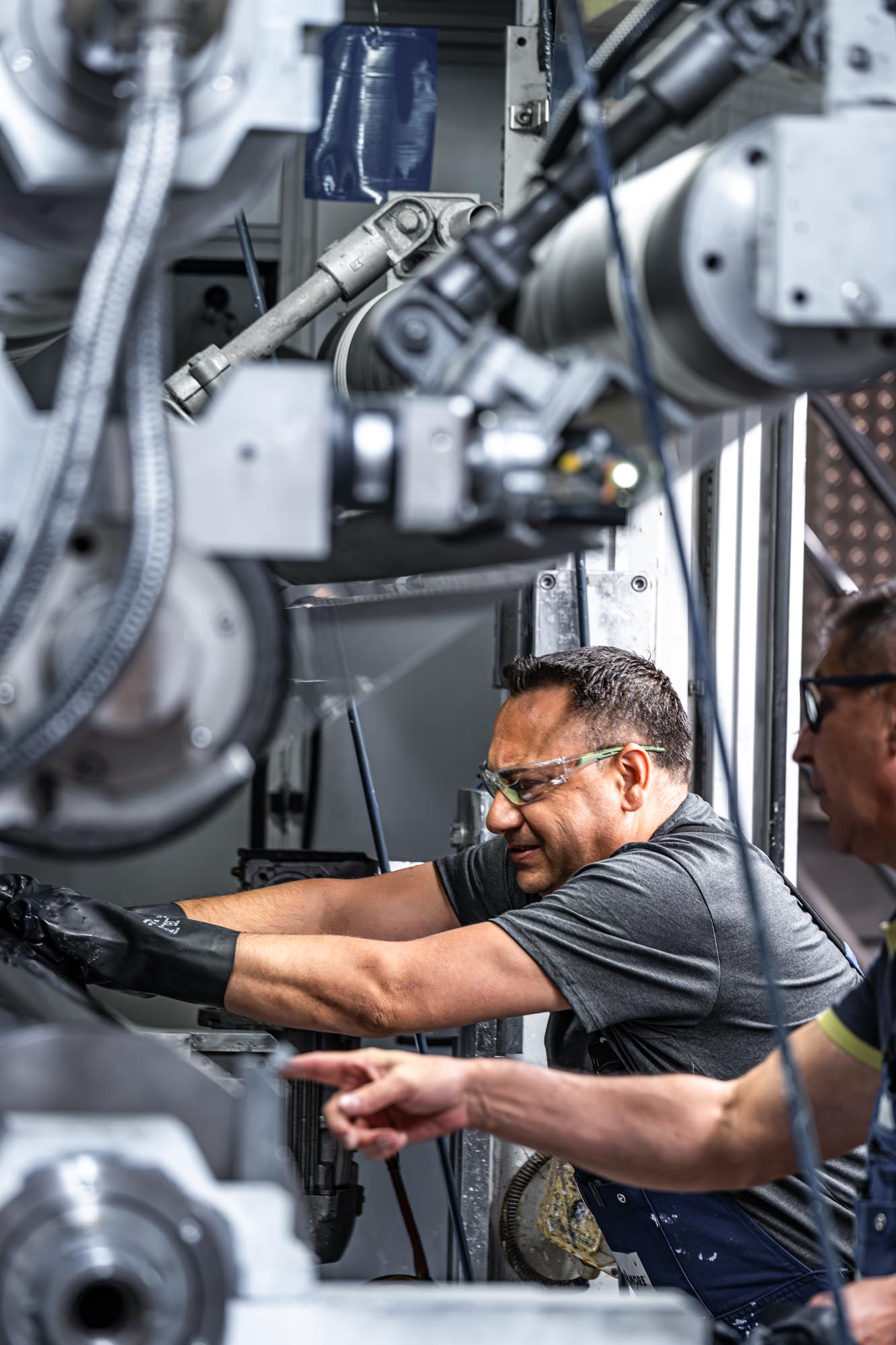
Automotive manufacturing requires more than just technical expertise. Materials must be reproducible, undergo key approval processes, and remain stable throughout the vehicle’s entire service life. That is why we support automotive development projects from initial prototype production through to production-ready specifications.
For films used in the automotive industry—which must be chemical-resistant, abrasion-resistant, and thermally stable—we develop material combinations specifically tailored to the application. Rather than a standard product that is retroactively adapted, we offer a flexible film system designed from the outset to meet the specific requirements.
All Dunmore manufacturing sites are certified to ISO 9001:2015. The quality management system applies to development, production, and delivery.
Films for the engine compartment and underbody areas are designed to be resistant to oils, coolants, and cleaning agents, as well as to provide thermal stability. The specific test requirements are defined on a project-by-project basis.
Every production batch is documented and traceable. This applies to raw materials, process parameters, and finished products—a requirement that Tier 1 suppliers and OEMs regularly verify.
Dunmore Europe supports customers in Europe in the development of functional material systems. The process may include requirements analysis, material selection, prototyping, testing, optimization, and preparation for mass production.
Printable label films for the engine compartment must be able to withstand temperatures of up to 150 °C, as well as fuel, oil, and cleaning agents, over the long term. Dunmore develops heat- and chemical-resistant facestock films with a printable surface that keep nameplates, safety instructions, and traceability labels legible even under extreme conditions. Security features to combat product piracy and diversion can be integrated.
Dunmore laminating films are applied to plastic and composite substrates to provide interior surfaces with a decorative, abrasion-resistant finish. The films are available in a variety of finishes and meet the scratch resistance and color fastness requirements for automotive interiors. Scratch-resistant film for automotive interiors can be used both as a permanent surface film and as temporary protection during manufacturing.
For sound-absorbing and sound-insulating components, Dunmore develops multilayer film composites that combine acoustically effective materials with structural reinforcements. The composites can be applied to door panels, floor assemblies, and headliners while meeting the weight and processability requirements of mass production.
Metallized films from Dunmore reflect thermal radiation and protect temperature-sensitive components from heat exposure. Applications include heat shields, battery housings, and wiring harnesses. Metallization is performed using a vacuum process on various substrate films, depending on the required temperature resistance and flexibility.
Automotive requirements are rarely simple. Send us your specifications or briefly describe the application. We'll get back to you within a few business days with an initial assessment.

Team Dunmore Europe
kontakt@dunmore.de
In the automotive industry, depending on the application, printable label materials, laminated surface films, acoustic composite materials, and metallized films for thermal reflection are used. Dunmore Europe tailors the substrate, coating, metallization, and lamination to the requirements of the specific component and process.
A film used in automotive manufacturing must meet mechanical, thermal, chemical, and optical requirements depending on its installation location. These may include temperature resistance, resistance to oils, fuels, coolants, and cleaning agents, abrasion resistance, UV stability, low weight, and consistent processability. The relevant test specifications are defined for the specific application.
Dunmore Europe begins by defining the customer’s requirements. Next, suitable films, nonwovens, or foams are selected and tailored to the application through coating, lamination, metallization, or finishing. Samples, testing, and optimization lead to a material specification that can be further evaluated for the intended process.
Dunmore is certified to ISO 9001:2015. According to the available information, this certification applies to all manufacturing sites. Dunmore does not currently hold IATF 16949 certification. Any additional quality certifications required for an automotive project should be clarified directly with the Dunmore Europe team.
Dunmore assists customers with prototype production and the development of a production-ready material specification. The equipment and process used for a prototype depend on the material composition, format, and requirements. To provide an initial assessment, Dunmore needs to know the application, the relevant loads, and the desired specifications.